Untold Words
PRODUCT DESIGN
MENTAL HEALTH
2024
TIMELINE
January - April, 2024
TEAM
Individual Project
ROLE
Product Designer
SKILLS
Figma, User Research, Adobe Illustrator
Overview
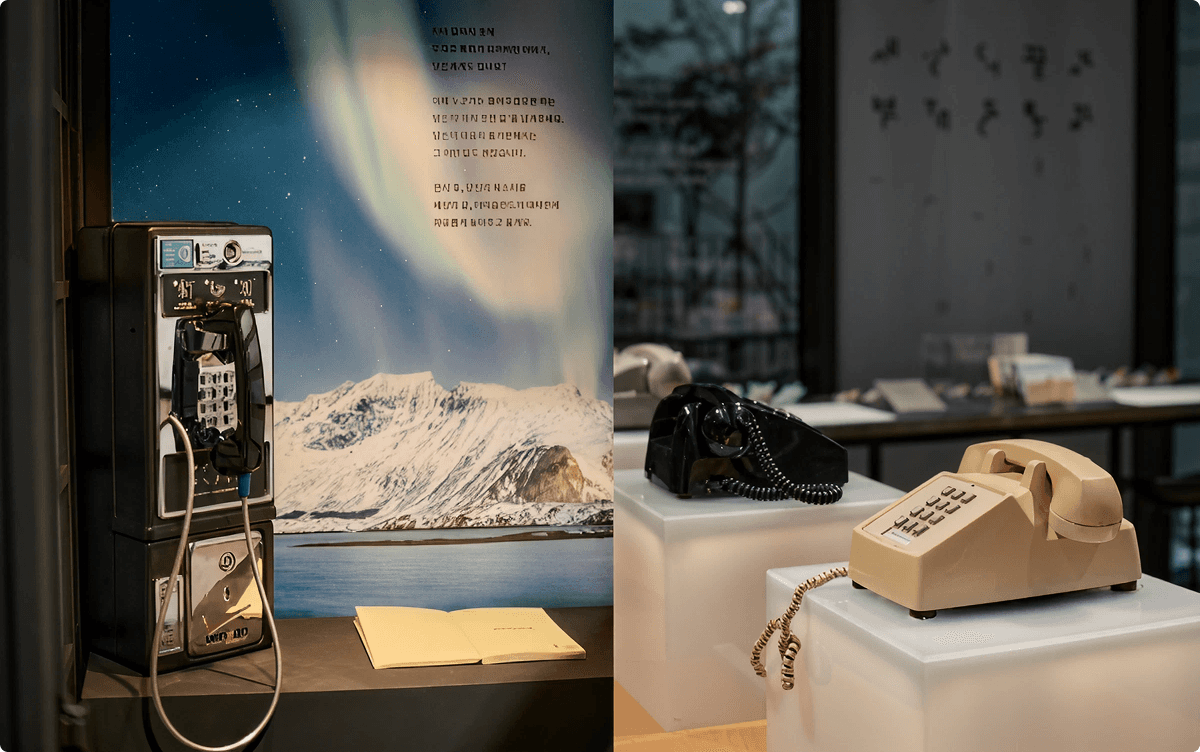
In a South Korean exhibition, phones rang in an empty room. Visitors picked them up to hear anonymous messages left by strangers. When they were done, they could leave their own. At the end, the messages were released into the wind at the Ushuaia lighthouse.
That moment stayed with me. What if that experience existed digitally, for everyone who had something they never got to say?
The problem worth solving
People carry words they never spoke. To someone who passed away. To someone they lost touch with. To no one in particular, just out into the world. Social media was not built for that. It was built for reactions, not release.
Untold Words is an anonymous voice recording app where users share those stories and listen to others from around the world, without ever revealing who they are.
RESEARCH
Who I designed for
This was a personal project with no client brief, so I built the user foundation myself through desk research and the exhibition concept that inspired it.
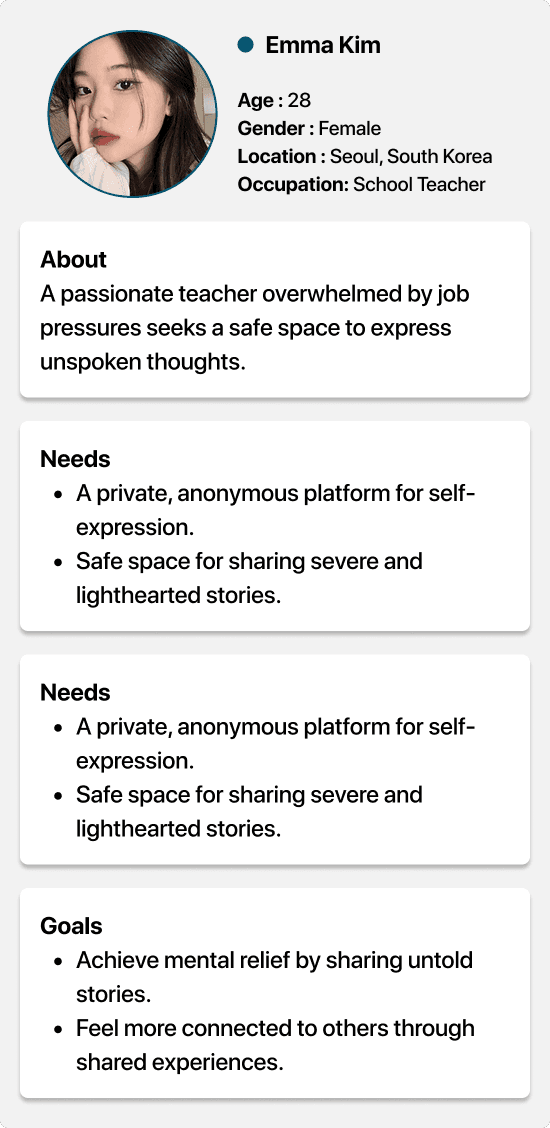
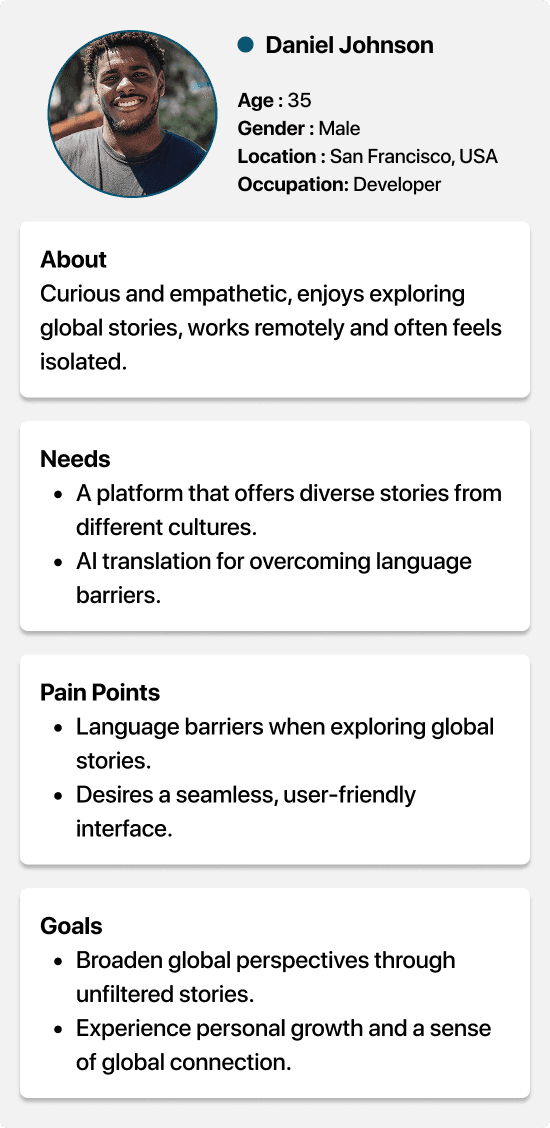
Two people anchored every design decision: Emma, a teacher in Seoul overwhelmed by job pressure who needed a private outlet with no social consequences, and Daniel, a remote developer in San Francisco who felt isolated and was drawn to unfiltered human stories from around the world.
The design challenge — anonymity
Anonymity is not a feature. It is the entire product. If users don't feel genuinely safe, they won't share anything real. That meant every design decision had to reinforce the feeling of safety, not just the technical reality of it. Three decisions anchored this.
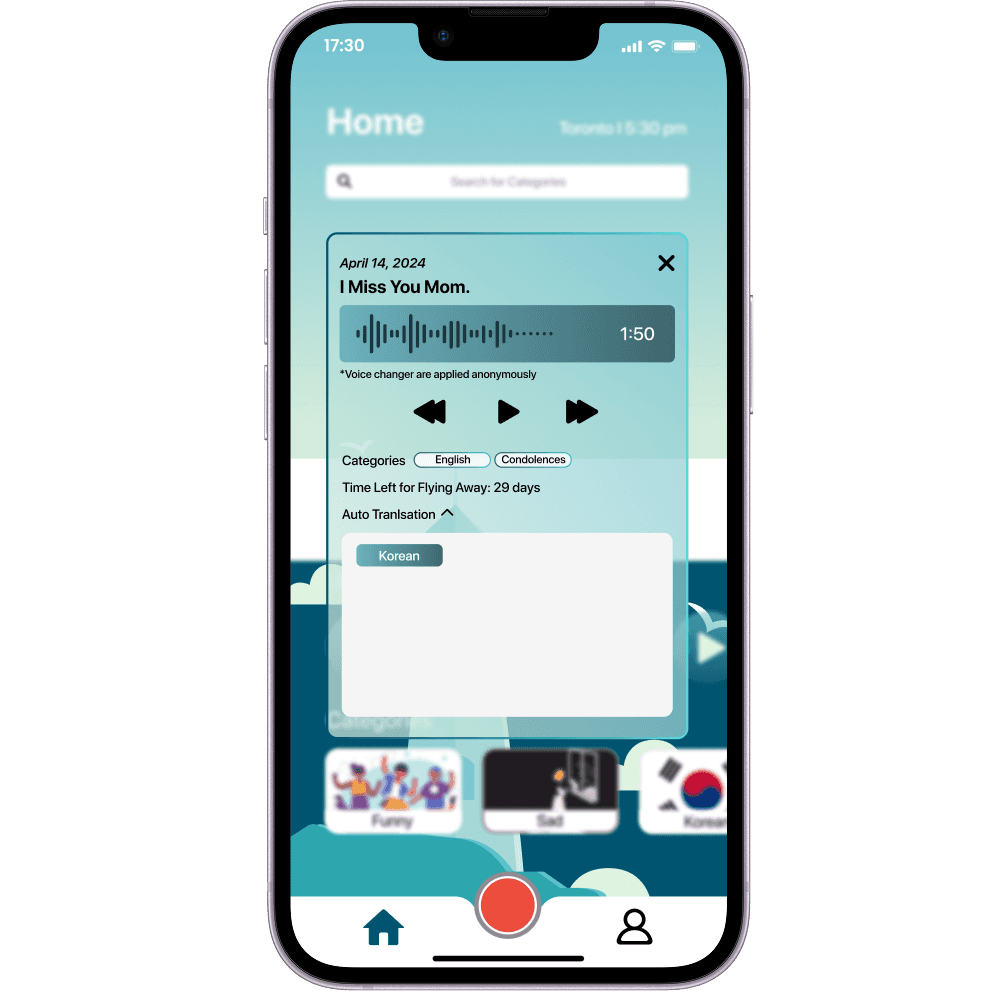
Voice changer
AI randomises the filter on every recording so no two voices sound alike. Users never sound like themselves.
Consent before recording
users actively choose to participate before anything is captured. The decision is deliberate, not assumed.
Flown Away
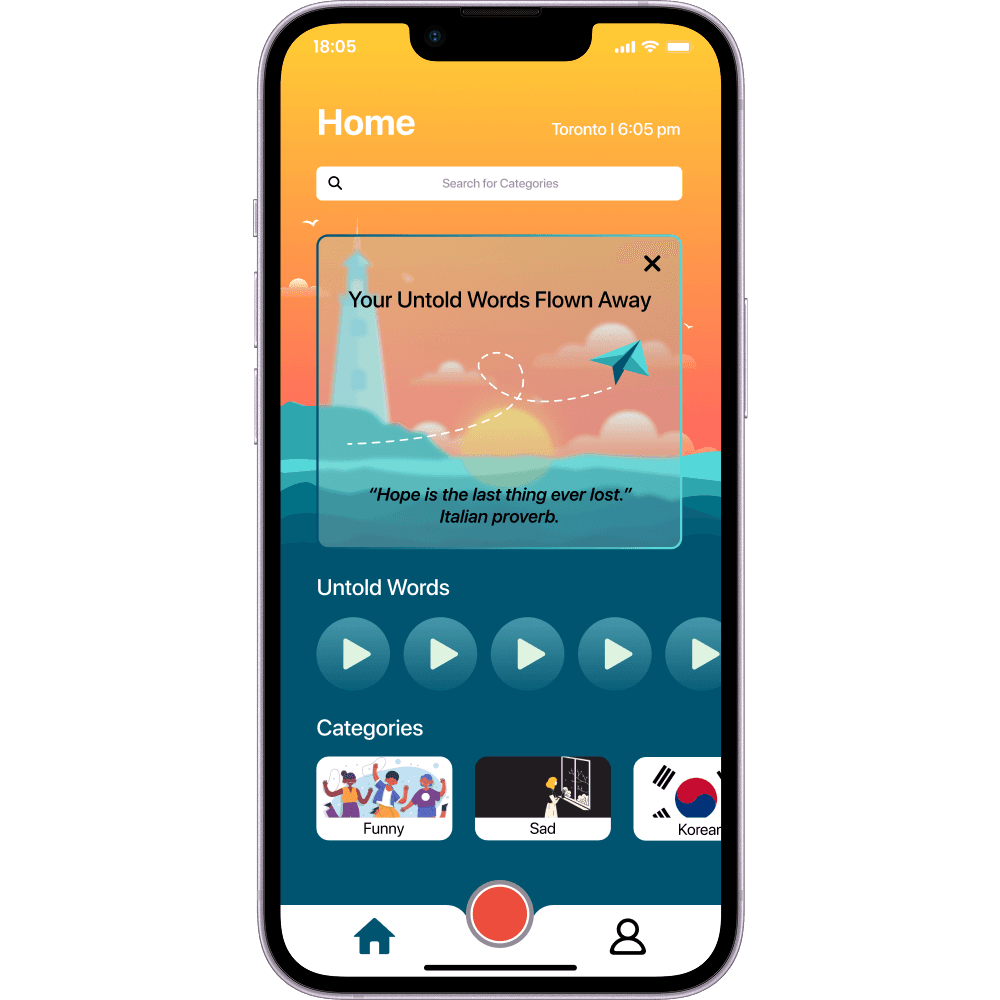
recordings delete after 30 days with an animation of stories drifting to the ocean. Leaving something behind feels intentional, not like a settings option.
IDEATION
Process
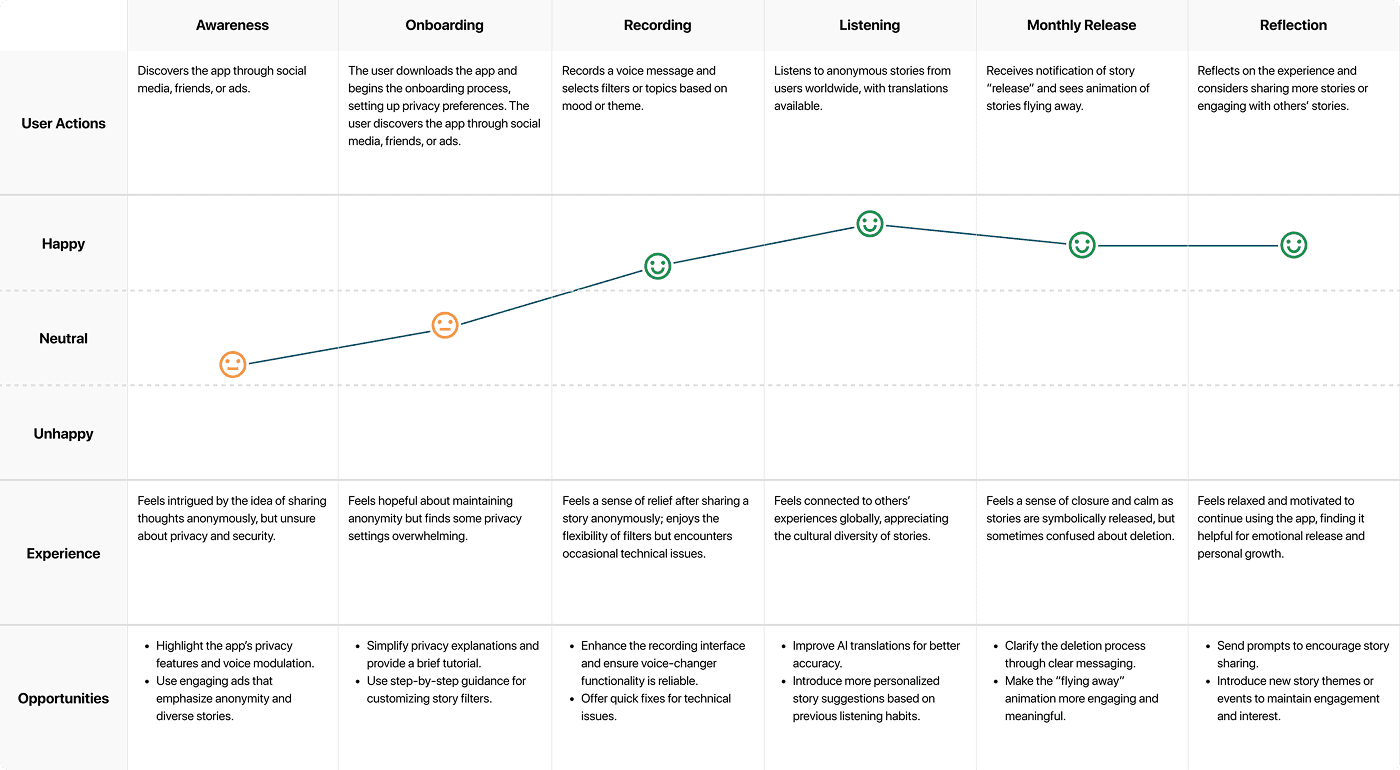
With no client brief to work from, the process had to start with the emotional experience first. I mapped the user journey before designing a single screen, focusing on how someone feels at each moment — the hesitation before recording, the relief of sharing, the calm of letting go.
Journey map
Mapping the emotional arc revealed that the most critical moments were not the features themselves but the transitions between them — deciding to share, trusting the app with your voice, and the feeling of release when a story is gone.
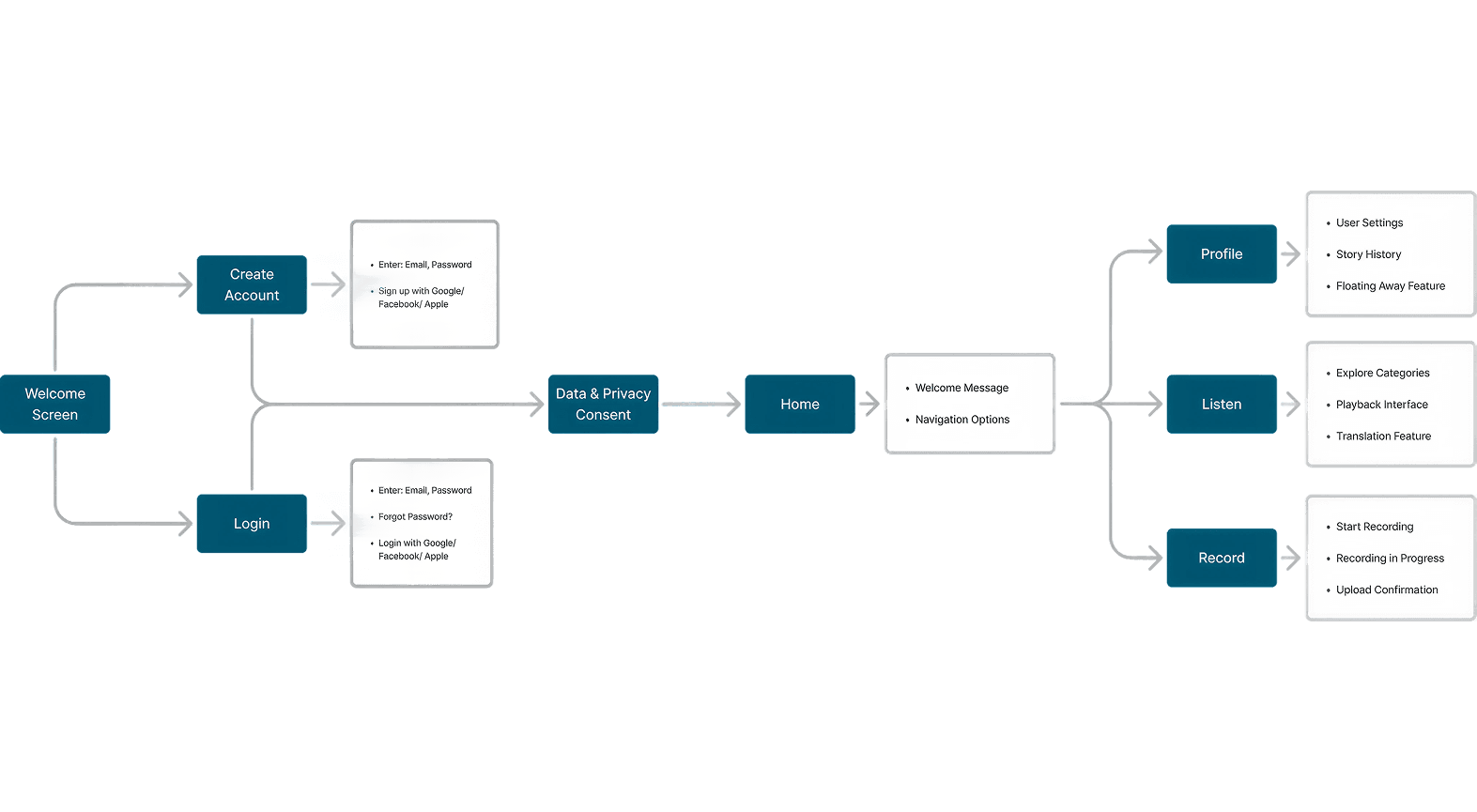
Information architecture
The structure had to support anonymous browsing without requiring sign-in friction. Every path through the app needed to feel like exploring, not filling out a form.
Two mid-fidelity wireframes
Early wireframes focused on two screens — the home feed and the recording flow. The home feed needed to feel like stumbling across something, not a social media scroll. The recording flow needed to feel ceremonial, not transactional.
FINAL DESIGN
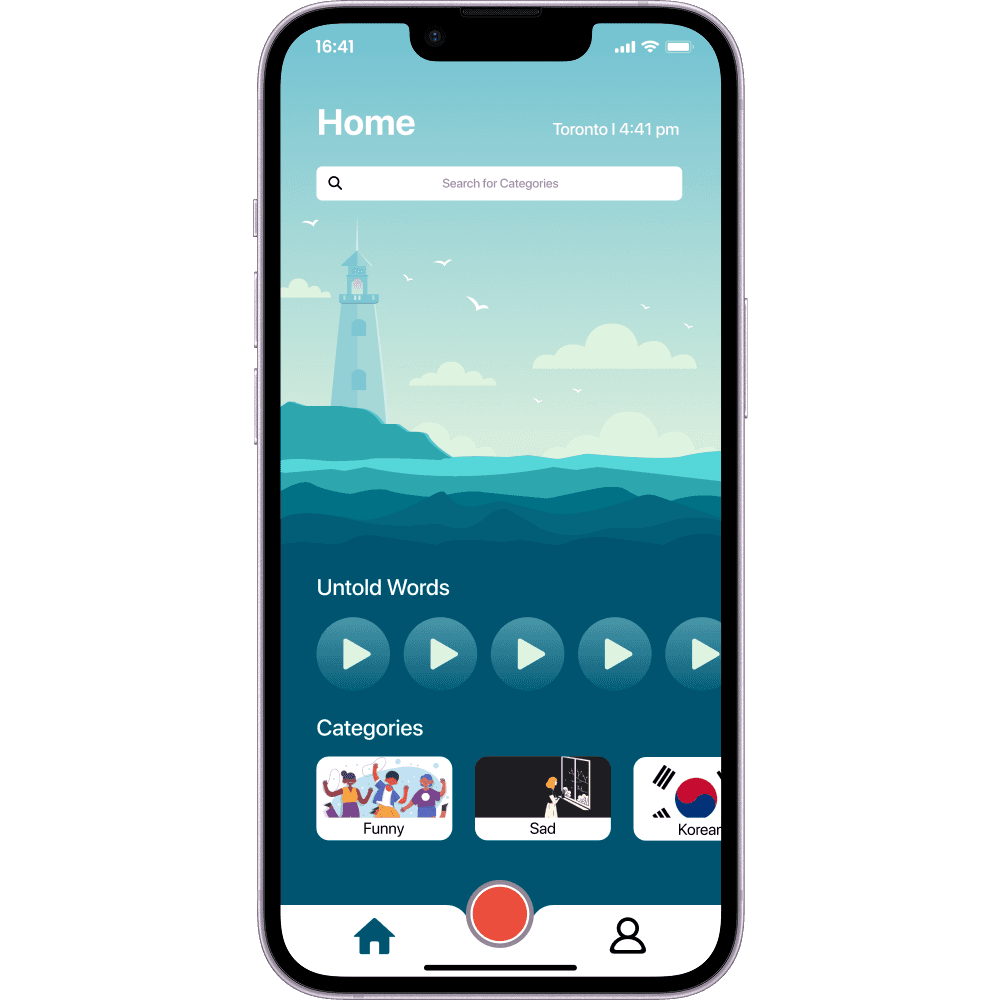
Personalized Filter
Users can personalize the filters to select what they want to listen to based on keywords such as 'Sad,' 'Happy,' 'Grief,' 'Parents,' 'Family,' 'Korean,' 'English,' etc.
Voice Changer
Early wireframes focused on two screens — the home feed and the recording flow. The home feed needed to feel like stumbling across something, not a social media scroll. The recording flow needed to feel ceremonial, not transactional.
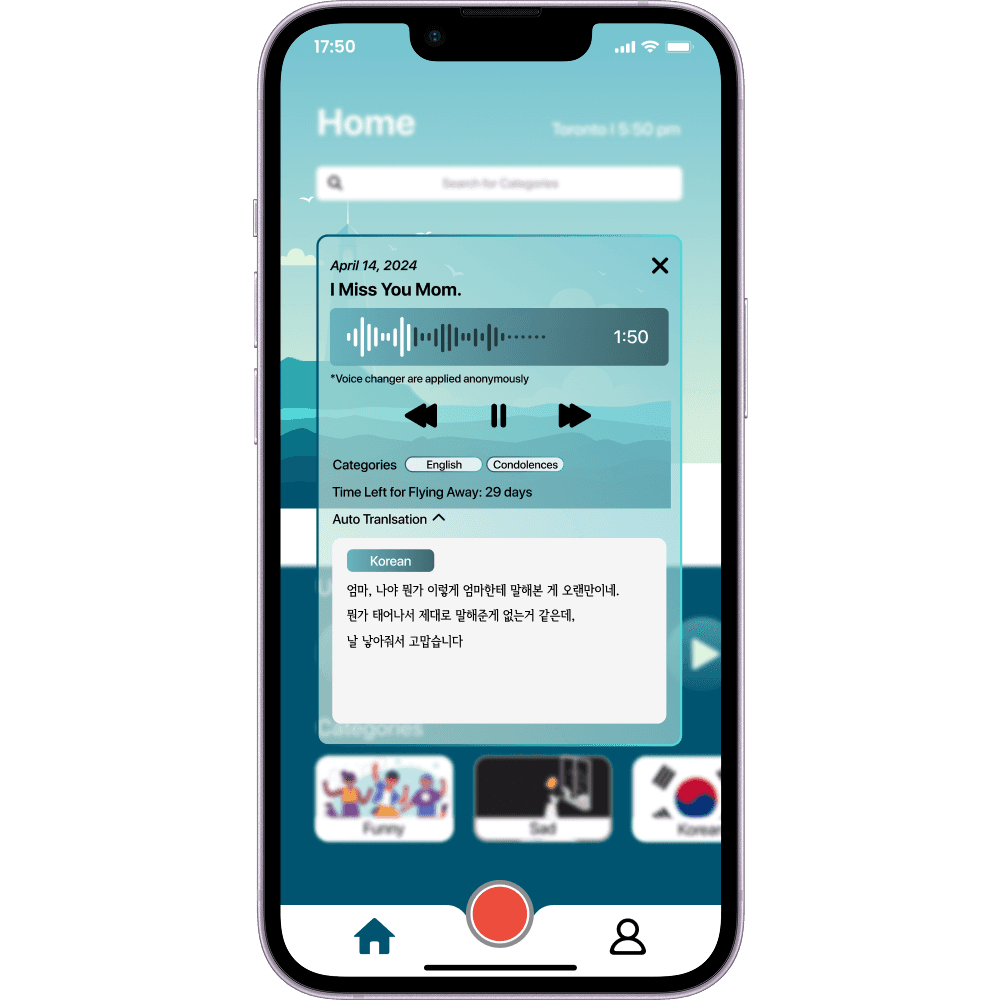
AI Translator
Stories recorded in Korean, Portuguese, or Arabic are accessible to everyone. The translated transcript appears below the playback so listeners can follow along without losing the emotional texture of the original voice.
Flown Away
After 30 days, every recording disappears. Users who shared something receive a notification with an animation of their story flying away to the Pacific Ocean. Most apps treat deletion as a settings option. Untold Words treats it as part of the experience — leaving something behind should feel like a choice, not an accident.
Reflection
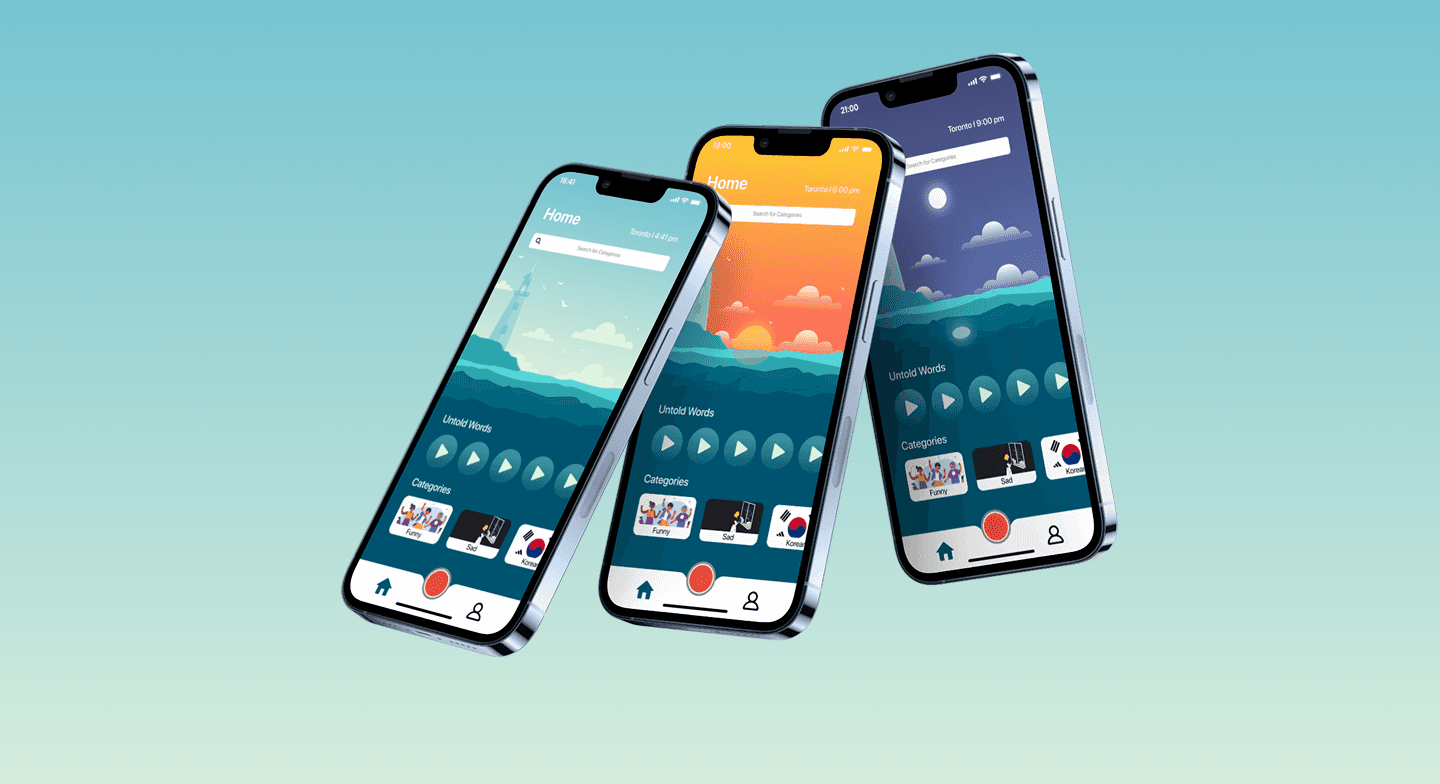
This ended as a Figma prototype. If it went further, the next step would be usability testing with people who have actually experienced grief or isolation — the people this app was designed for. I would also want to sit with the ethical weight of storing voice recordings, even temporarily, and what responsible design looks like when the product holds something that personal.